In recent years, the government has been actively cracking down on public housing misuse. To strengthen enforcement and increase deterrence, the Housing Bureau recently submitted a bill to the Legislative Council to amend the Housing Ordinance. The amendment will be gazetted on June 20, 2025, and take effect from March 31, 2026.
The proposed changes aim to address three key areas. First, a new offense for serious misuse of public housing will be introduced, with a maximum penalty of HK$500,000 and one year of imprisonment. Second, authorised officers will be empowered to require individuals suspected of misuse to provide personal information, such as identity cards. Third, the prosecution time limit for offenses such as making false statements, refusing to provide information, or illegally transferring units will be extended to enhance enforcement effectiveness.
Serious misuse includes three main behaviours. These are subletting the unit, whether or not rental income is received; occupying a vacant unit or using it for commercial purposes; living in a verified alternative residence or being absent from the unit for more than three consecutive months without regular residence; and engaging in illegal activities within the unit.
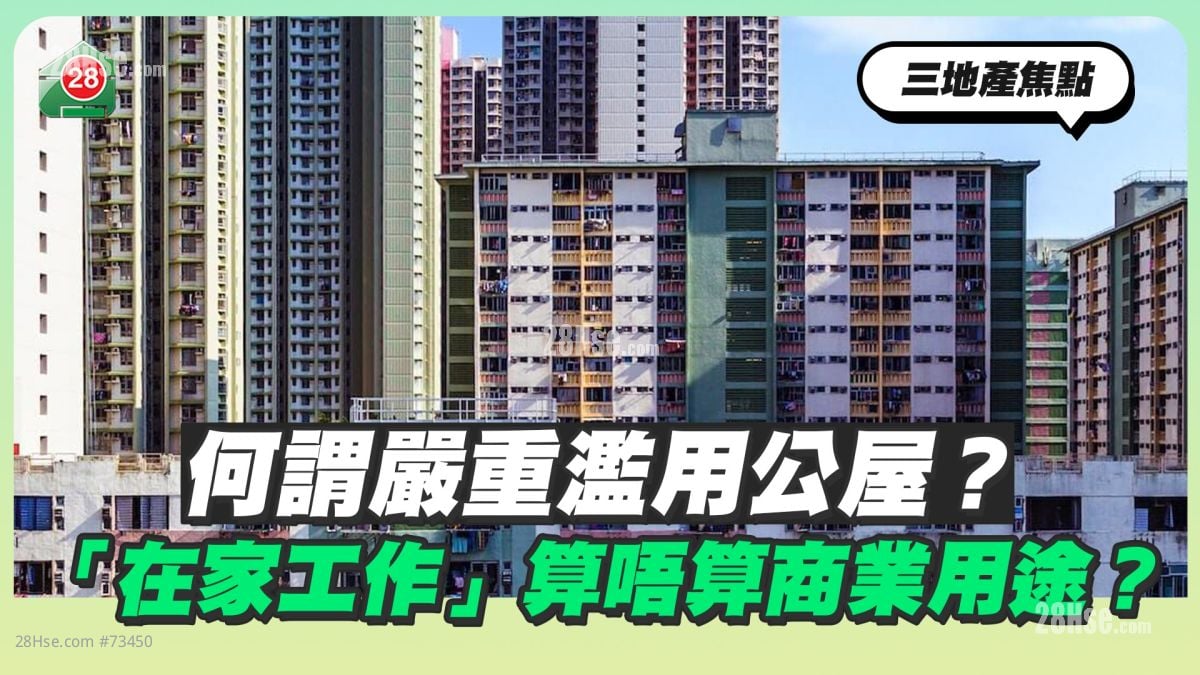
There is often confusion about what qualifies as using public housing for commercial purposes. For example, does working from home, making handmade crafts at home to sell elsewhere, or registering a business address at a public housing unit count as serious misuse?
The key factor is whether the tenant is exploiting the public housing unit as a tool for profit. For example, a tenant who no longer resides in the unit but converts it into a tutorial centre or gym to generate income would be guilty of misuse. In contrast, working from home, creating crafts at home to sell externally, or registering a business address without conducting business activities at the unit would not be considered misuse.
That said, tenants who register a business address at a public housing unit should be cautious. This could raise suspicions about whether the unit is still primarily used for residential purposes. It may also increase the likelihood of inspections or surprise checks by the authorities to ensure public housing resources are fairly allocated.
The government will assess each case individually to determine whether the tenant has misused the unit for commercial purposes. If tenants disagree with the decision, they may file an appeal. The Housing Authority’s Appeal Panel will review the case from an objective perspective to decide whether to overturn or uphold the ruling.
To ensure public housing resources are used appropriately, serious misuse cases will face prosecution. However, the government has introduced a leniency policy to encourage violators to come forward and rectify their actions.
For certain serious misuse cases, if tenants voluntarily surrender the public housing unit and admit their violation, no retrospective penalties will be imposed. This means past violations will not be pursued, and no additional fines will be applied.
The aim of this policy is to accelerate the recovery and reallocation of public housing resources while giving violators a chance to correct their mistakes. However, it is only applicable to specific situations, and tenants must act quickly to avoid missing the opportunity or facing stricter legal consequences.
Tenants who suspect they may be involved in misuse are strongly advised to consult the Housing Authority or seek professional legal advice as soon as possible to understand their situation and make an informed decision.