
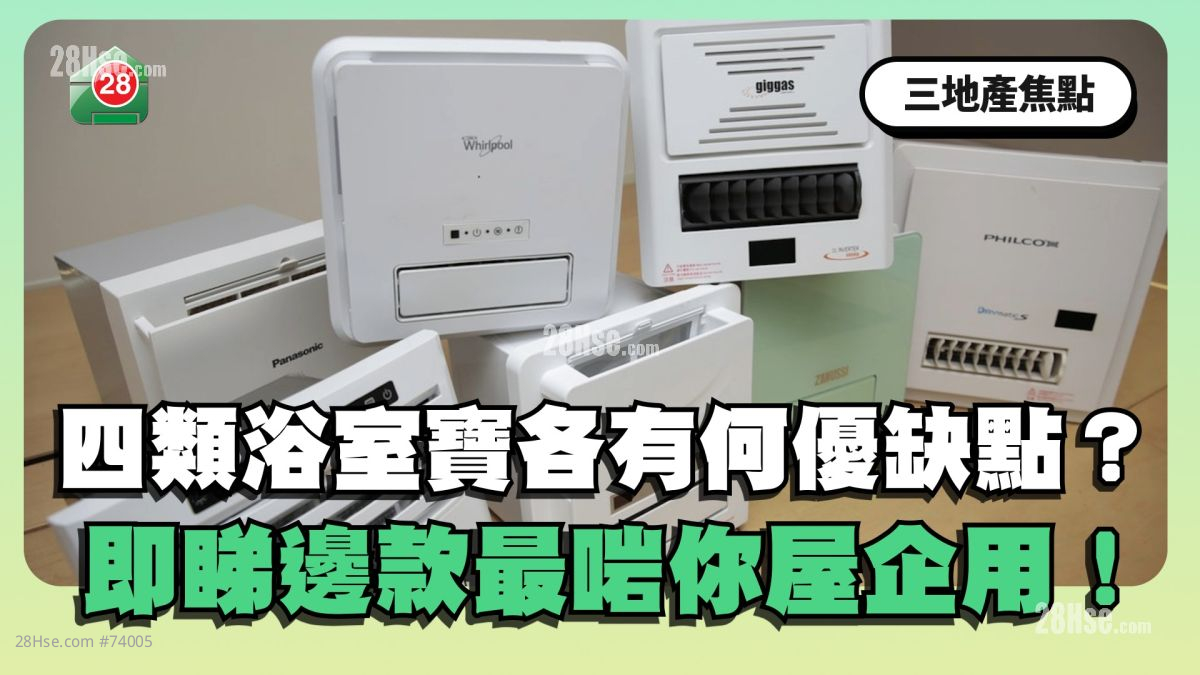
With the winter monsoon in full swing, the Hong Kong Observatory has issued a cold weather warning. For many, the biggest challenge in winter is getting out of a warm bed in the morning, especially to take a shower. For those who dread the cold, installing a bathroom heater can provide a cosy and comfortable showering experience during the chilly months.
In recent years, multifunctional bathroom heaters that combine heating, drying, ventilation, and air circulation have become increasingly popular, helping to combat cold or damp conditions. With so many models on the market, selecting the right one can feel overwhelming. There are four main types of bathroom heaters: ceiling-mounted, window-mounted, wall-mounted, and portable. Each type has its own advantages and drawbacks.
Ceiling-mounted bathroom heaters, as the name suggests, are installed in the ceiling. One of their main advantages is that they do not take up floor or wall space, making them ideal for smaller bathrooms. They also create a more evenly distributed airflow and look sleek and stylish. However, ceiling-mounted heaters are better suited for bathrooms with higher ceilings, typically over 10 feet, and those with a false ceiling. Installation involves additional work such as cutting holes, concealing pipes, and connecting exhaust ducts, which means higher installation costs.
Window-mounted bathroom heaters are one of the more common options. They are space-saving, requiring only about eight inches of width, and can often replace an exhaust fan without the need for extra ductwork, making installation relatively straightforward. However, they may block some natural light from the window, and they tend to produce more noise compared to other types. Before purchasing, it is essential to ensure your bathroom has a suitably sized window for installation. Since window-mounted models come in various sizes, measuring your window carefully is crucial to avoid issues with fitting.
Wall-mounted bathroom heaters can be installed on any wall, making them a practical option for windowless bathrooms or for those who wish to keep their exhaust fans. These models are generally more affordable, making them a budget-friendly choice. However, wall-mounted heaters typically have narrower air vents, resulting in weaker ventilation performance. They also require ductwork to expel air outside, and the exposed pipes may affect the bathroom’s overall appearance.
Before purchasing a bathroom heater, it’s important to ensure your bathroom has suitably-sized windows for installation. Since window-mounted bathroom heaters come in various sizes, you must measure your window dimensions carefully beforehand. Otherwise, mismatched sizes may prevent successful installation.
Wall-mounted bathroom heaters, on the other hand, can be installed anywhere on the wall. They are ideal for windowless bathrooms or for those who wish to retain their exhaust fan. These models are more affordable, making them a budget-friendly option. However, wall-mounted heaters typically have narrower air vents, resulting in weaker ventilation performance. Additionally, they require ducts to expel air outside, which may leave exposed pipes that could affect the bathroom’s appearance.
Lastly, portable bathroom heaters have gained popularity in recent years. Their main advantage lies in their compact and lightweight design, which requires no installation. They can be hung on walls or simply placed on countertops, making them incredibly versatile. These heaters usually provide higher-temperature warm air and can be moved to different rooms, offering greater flexibility. They are also generally more affordable than fixed-installation models.
However, portable bathroom heaters often lack features like ventilation, air exchange, or drying functions. Their limited airflow and less even heat distribution may also result in a less optimal experience. When using a portable heater, there are two key safety precautions to keep in mind: first, ensure your bathroom has a compliant 13A power socket; second, place the unit securely to avoid contact with water or accidental falls into the bathtub, which could pose a risk of electric shock.
When choosing a bathroom heater, it’s important to consider the specific layout and conditions of your bathroom. Factors such as the size of the unit, energy consumption, noise levels, and additional functions should all be taken into account. Ultimately, selecting the right type and model depends on your personal needs and budget, ensuring you create a warm and comfortable bathroom experience during the cold winter months.