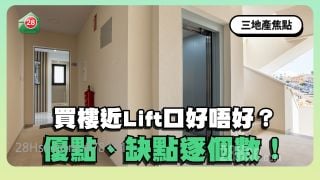
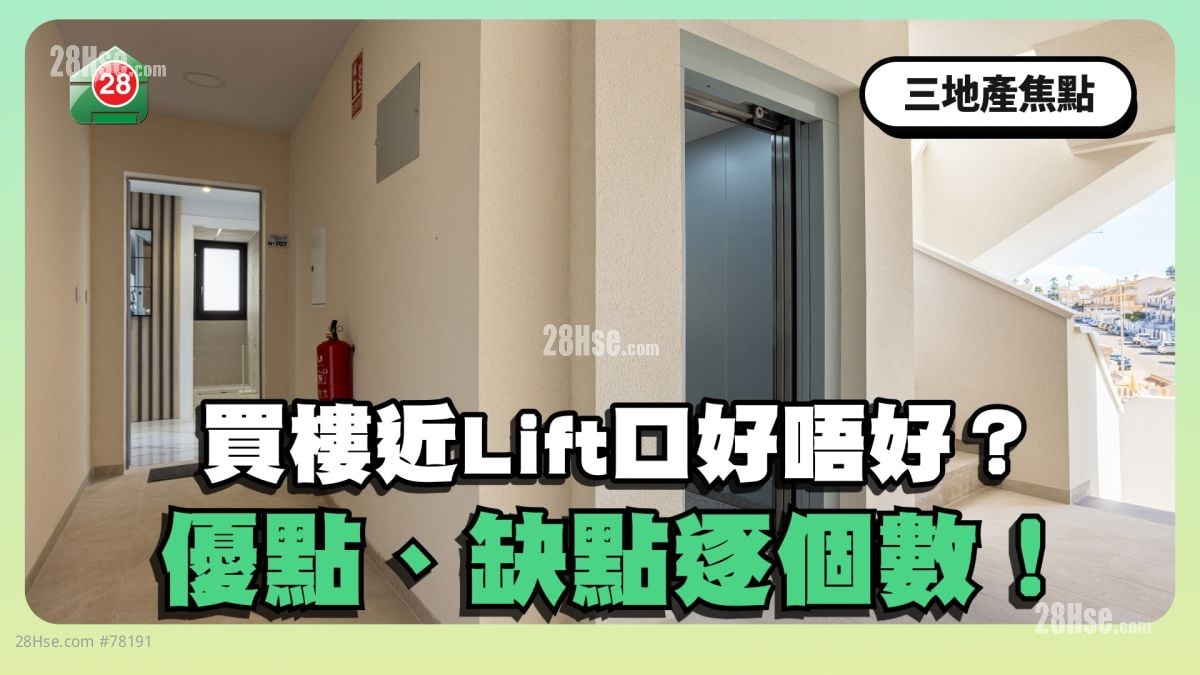
When buying a home, apart from considering the price, floor level and view, the unit’s position on the same floor also requires attention. Some units are located beside the lift lobby, making access very convenient, but some people are also concerned that being too close to the lift may bring noise and privacy issues. So, when buying a home, should you choose a unit near the lift? What are the advantages and disadvantages that need to be considered?
For units located near the lift, the biggest advantage is of course the convenience of access. Residents do not need to walk through a long corridor before returning home, which can be less tiring, especially when carrying a large number of shopping bags, pushing a baby stroller or moving large items.
For elderly people, people with limited mobility, and families with young children, reducing the walking distance is also an advantage. In addition, some large housing estates have more units on each floor and adopt a “many units per lift” design, resulting in longer corridors. Therefore, the distance between the unit and the lift becomes even more worth considering.
However, units near the lift also have potential disadvantages, one of which is noise. The alert sounds when the lift doors open and close, residents talking in the lobby, and people coming and going late at night may all create noise and affect the quietness of nearby units. If the unit shares a wall with the lift shaft, it is also necessary to pay attention to whether the sound generated when the lift operates can be heard, or even whether vibrations can be felt.
However, not all units near the lift are necessarily noisy. The actual situation still depends on the building’s soundproofing design, corridor layout and the position of the unit’s front door. For example, some units have thicker front doors, which may provide better soundproofing and reduce outside noise entering the home.
Apart from noise, privacy is another factor that needs to be considered. If the unit’s front door directly faces the lift, people waiting for the lift may have the opportunity to look directly into the home whenever the residents open the door. In particular, in some homes with an open-plan design, if there is no clear separation between the entrance area and the living and dining room, the privacy issue may be more noticeable.
Therefore, when viewing a property, prospective buyers should not only pay attention to the unit’s layout, view and overall condition, but should also consider the distance between the unit and the lift. During the viewing, close the front door and test the soundproofing inside the home, paying attention to whether the sound of the lift operating and voices in the corridor can be heard inside.
In addition, if the unit unfortunately experiences a burst water pipe or serious water leakage, a large amount of accumulated water may flow out from the front door into the corridor. If the unit is close to the lift lobby and the floor lacks proper drainage or water-blocking design, the accumulated water may flow into the lift shaft, affecting the operation of the equipment. Lift service may even need to be suspended for inspection and repairs, and there may also be a possibility of having to pay compensation.
As for whether units near the lift will be more difficult to sell in the future, there is actually no single answer, as it mainly depends on buyers’ needs and preferences. Some buyers who value quietness and privacy may prefer units at the end of the corridor or farther away from the lift. In contrast, some families with elderly members may consider units near the lift more convenient.
Similarly, being near the lift does not mean that the property price will definitely be lower. The actual value of a unit still depends on factors such as floor level, view, orientation, layout and overall market conditions. Prospective buyers can refer to transaction records of units in the same housing estate with similar floor levels and sizes to understand whether there are any obvious price differences between units in different positions.