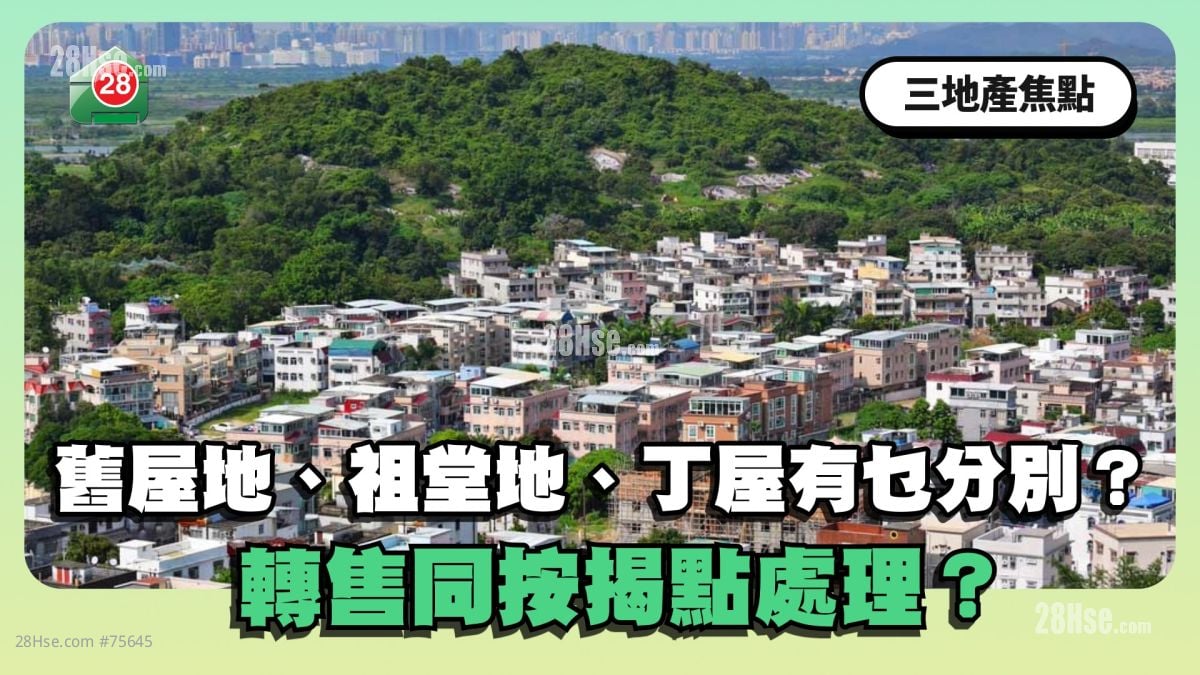
Buying property is a topic that comes up often in conversations, and recently, a friend mentioned that he had his eye on a village house. What caught his interest was the property’s high efficiency ratio (usable space) and its reasonable price.
Village houses are often appealing to buyers due to their lower entry cost, but before making a purchase, it’s crucial to pay attention to resale restrictions and mortgage application processes, as a simple mistake could lead to unforeseen issues.
Village houses can generally be divided into three types: old lots or old houses, ancestral land, and small houses. Because each type of village house comes with different kinds of resale restrictions and ownership issues, buyers should first determine what category the house falls into to assess how it will affect mortgage applications and property use.
The first type, old lots or old houses, refers to houses built on land leased collectively by the government from 1905 to 1972. These are typically situated in traditional villages in the New Territories and are not subject to strict limitations on height or floor area. However, if the owner wishes to rebuild the property, approval from the Lands Department is required. On the resale side, these houses are not subject to resale restrictions or premium payments. That said, because of their age, banks tend to be cautious when approving mortgages.
The second category is “ancestral land,” also recognised as “Tso/Tong lands.” This refers to land passed down from ancestors to their descendants, owned collectively by traditional organisations such as families or clans rather than by individuals. Selling properties built on ancestral land requires approval from the land manager and an official resale approval letter from the District Office.
The third type, and the one most commonly found in the market, is the “small house” or “Ding house.” Under the New Territories Small House Policy introduced in 1972, eligible male indigenous villagers aged 18 or above are entitled to a one-time opportunity to build a house within recognised village boundaries. Development of Ding houses follows specific building regulations, such as a limit of three stories and a maximum floor area of 700 square feet per floor.
Ding houses can be built on private land or recognised government land. For houses built on private land, owners may freely sell the property five years after completion, but selling before that requires payment of a land premium. For Ding houses built on recognised government land, owners must pay a land premium regardless of when they sell.
One of the most critical considerations when purchasing a village house is the mortgage process. For village houses priced at HK$10 million or below, buyers may apply for mortgages with up to 85 percent financing. However, approval depends on various factors such as the property’s age, location, and type. Mortgage terms for village houses can extend up to 30 years. When calculating the loan term, banks often use formulas like “55 minus the house’s age” or “65 minus the house’s age.” For high loan-to-value mortgages, the “55 minus the house’s age” formula is generally used. Some more conservative banks may only approve mortgages for village houses less than 10 years old, so it’s always a good idea to clarify this with your bank before proceeding.
Another issue to be aware of is valuation shortfalls. Village houses often have lower transaction volume and inconsistent property quality and location, which makes it difficult for banks to find market comparisons. This can result in lower property valuations, potentially impacting the mortgage amount a buyer can secure.