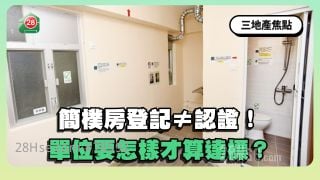
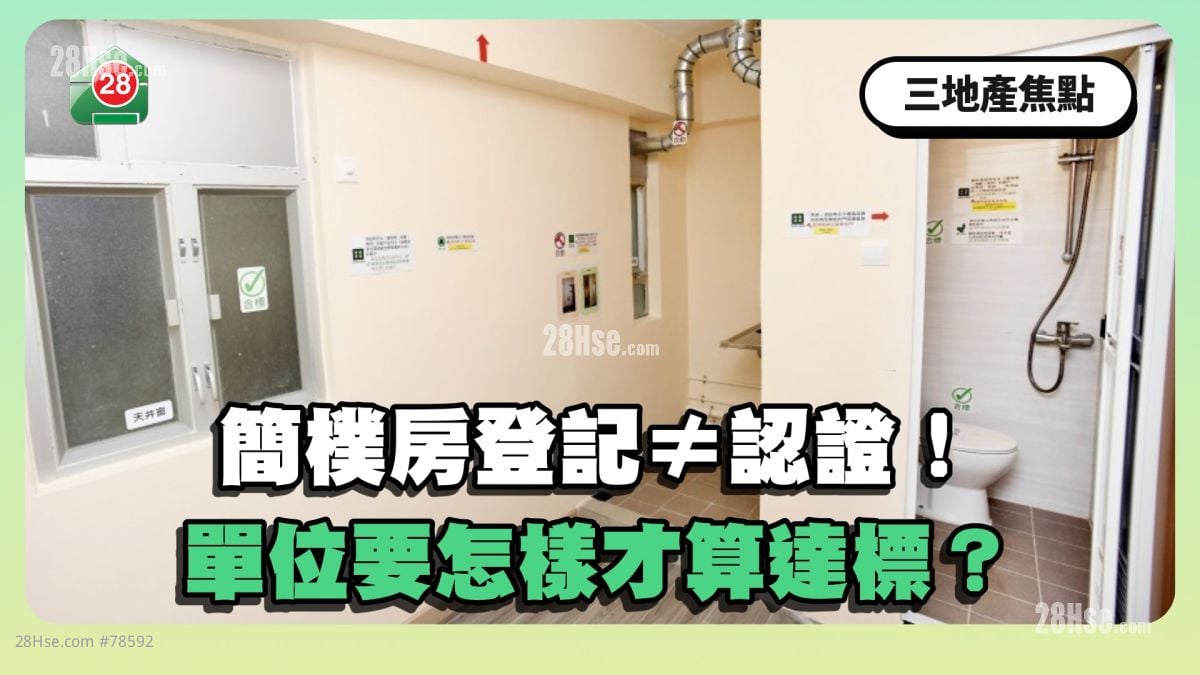
The Basic Housing Unit (BHU) regulatory regime came into effect on 1 March 2026. According to figures released by the Housing Bureau on 28 October, the authorities have received more than 21,000 registration applications for residential flats, covering over 75,000 subdivided units, or nearly 70% of the approximately 110,000 subdivided units across Hong Kong. However, many people still have questions about registration, certification and the transitional arrangements. Here’s a guide below.
First, registration for the grace period and BHU certification are two separate applications. Completing registration does not mean that a unit meets the minimum BHU standards. According to the published figures, the authorities have received certification applications for approximately 250 subdivided units, of which 53 have been certified. The significant difference between the number of registrations and certifications is related to their respective requirements and the transitional arrangements under the regime.
The regime follows a "registration first, enforcement later" approach, accepting both grace period registration and BHU certification applications during the first year. From 1 March 2027, the authorities will gradually begin enforcement action against subdivided units rented out without either valid grace period registration or BHU certification. Successfully registered residential flats will be allowed to gradually improve their subdivided units and apply for certification under the grace period arrangements.
The regime provides a 48-month transitional period, beginning with a 12-month registration period ending on 28 February 2027. Those who successfully register will then benefit from a further 36-month grace period until 28 February 2030, giving owners or operators sufficient time to improve their units, meet the statutory requirements and apply for BHU certification.
Owners and operators should also note that the final six months of the grace period, from 1 September 2029 to 28 February 2030, constitute the "countdown period". During this period, subdivided units within registered residential flats that have not yet obtained certification cannot enter into new residential tenancies. Certain existing tenancies will also be automatically terminated in accordance with statutory arrangements. Owners and operators should therefore arrange improvement works and certification applications in advance.
What standards must a unit meet to obtain BHU certification? First, certification applies to eligible subdivided units within private domestic buildings or the domestic portions of composite buildings. Each unit must have an internal floor area of at least 8 square metres, equivalent to approximately 86.1 square feet. The clear height from floor to ceiling must be at least 2.3 metres, while the clear height from floor to the underside of any beam must be at least 2 metres.
Each unit must have a separate toilet for the exclusive use of its occupants, enclosed by partition walls and a door to separate it from other spaces. The floor and walls must be properly waterproofed. A separate water supply point and sink must also be provided outside the toilet, with waterproofing applied to the surrounding floor and walls.
Regarding fire safety, under normal circumstances, if the original residential flat retains its entrance fire door or replaces it with one offering equivalent or higher fire resistance, the common corridor leading to the subdivided units must have a clear width of at least 0.75 metres. If the original fire door is removed or replaced with a door offering lower fire resistance, the minimum clear width increases to 1.05 metres. Each subdivided unit and the common areas of the original residential flat must be equipped with separate fire detectors, while fire extinguishers must also be provided in the common areas.
For lighting and ventilation, each unit must have at least one window facing outdoors, with an openable glazed area of at least 0.1 square metres. The unit must also be equipped with an artificial lighting system and mechanical ventilation facilities capable of providing at least five air changes per hour, using outdoor air for ventilation.
Each BHU must also have an individual water meter provided by the Water Supplies Department and an individual electricity meter provided by an electricity supplier. If the meters are installed within the original residential flat, consent from the owners' corporation is generally not required. However, if installation in the building's common areas, connection to communal mains or an increase in electrical load is necessary, consent may still be required under the building's deed of mutual covenant.
Once a unit meets the minimum standards and has been certified by a specified professional, a certification application may be submitted by the owner of the original residential flat or a person who has obtained written consent from all owners.
Applicants must complete Form BHU-01 and submit it together with the professional's certification report, the latest land register or ownership registration records, identity documents and other required supporting documents. Applications can be submitted to the Housing Bureau's Task Force on Tackling the Issue of Subdivided Units by post, in person or through an electronic form.
In terms of fees, grace period registration is free. The standard BHU certification application fee is HK$3,000 per subdivided unit, while the renewal fee is HK$2,400. Certification applications submitted between 1 March 2026 and 28 February 2027 are fully exempt from the application fee. Fee reduction arrangements for the following two years depend on the submission dates of the registration and certification applications.
Once an application is approved, certification takes effect on the date the certification notice is issued and remains valid for five years. For renewal, an application must be submitted three to six months before the certification expires. A specified professional must also certify again that the unit continues to meet the minimum standards.