Anti-Scam Tips

Scammers watch for new owner listings on 28Hse and often contact owners through WhatsApp soon after a listing goes live. They pose as tenants or buyers, but their real aim is to obtain money or personal information, or to lure owners into opening phishing links. Some scammers also pose as owners and use all kinds of excuses to take deposits from tenants or buyers. This page sets out common warning signs, ways to protect yourself and where to get help, followed by screenshots from real cases that show the tactics scammers commonly use. Please stay alert.

Warning signs
Posing as tenants or buyers
  • They open with "Is the flat vacant?" or "Are you the owner or an agent?".
  • The conversation quickly moves away from the property: they ask about your gender and family, talk at length about their own job and family, or bring up insurance and investments.
Posing as owners
  • They ask for a deposit or viewing fee before you have seen the flat, or want payment by unusual means such as cryptocurrency (USDT).
  • They cannot arrange a viewing, always saying they are "overseas" or "in quarantine / on a business trip", and will neither show the flat themselves nor have someone else do it.

Scammers also often use a WhatsApp Business account or an overseas phone number. If several of these signs appear together, the other party is very likely a scammer.

Protect yourself
  • Do not open links sent by strangers, and do not take screenshots for them.
  • Never give out your identity card, bank account or credit card details, or any SMS verification code.
  • Do not pay any "good-faith deposit", viewing fee, deposit or handling fee before the flat has been viewed in person and an agreement signed. A genuine tenant or buyer will not ask the owner to pay first.
  • Do not give out the contact details of your family members.
  • When shown a business card or company document, check that the email domain matches the company's official website. If in doubt, find the company's official phone number yourself and call to verify.
  • If the conversation keeps drifting away from the property, stop replying and block the other party.
Get help and report
WhatsApp 28Hse: 5165 9760 (when reporting, please include the other party's phone number and screenshots of the conversation)
28Hse scammer phone list: members who have posted a listing can search a number under Scammer Phone List in the member centre to see whether it has been reported.
Anti-Scam Helpline: 18222
Scameter (checks suspicious phone numbers, websites and email addresses): cyberdefender.hk/scameter
If you have lost money, report to the police immediately.
Common scam tactics

The screenshots below all come from real cases reported by our users. Phone numbers, photos, names, property details and company names have been masked.

1. Asking to talk to the women in your family

Some scammers pose as women (for example "Jenny") and use a WhatsApp Business account. They ask whether you are the owner or an agent and how to address you. Once they learn you are a man, they ask for your wife or mother to contact them instead, saying for example that they are "alone in Hong Kong and shy with strange men". They may even ask for your wife's WhatsApp number.
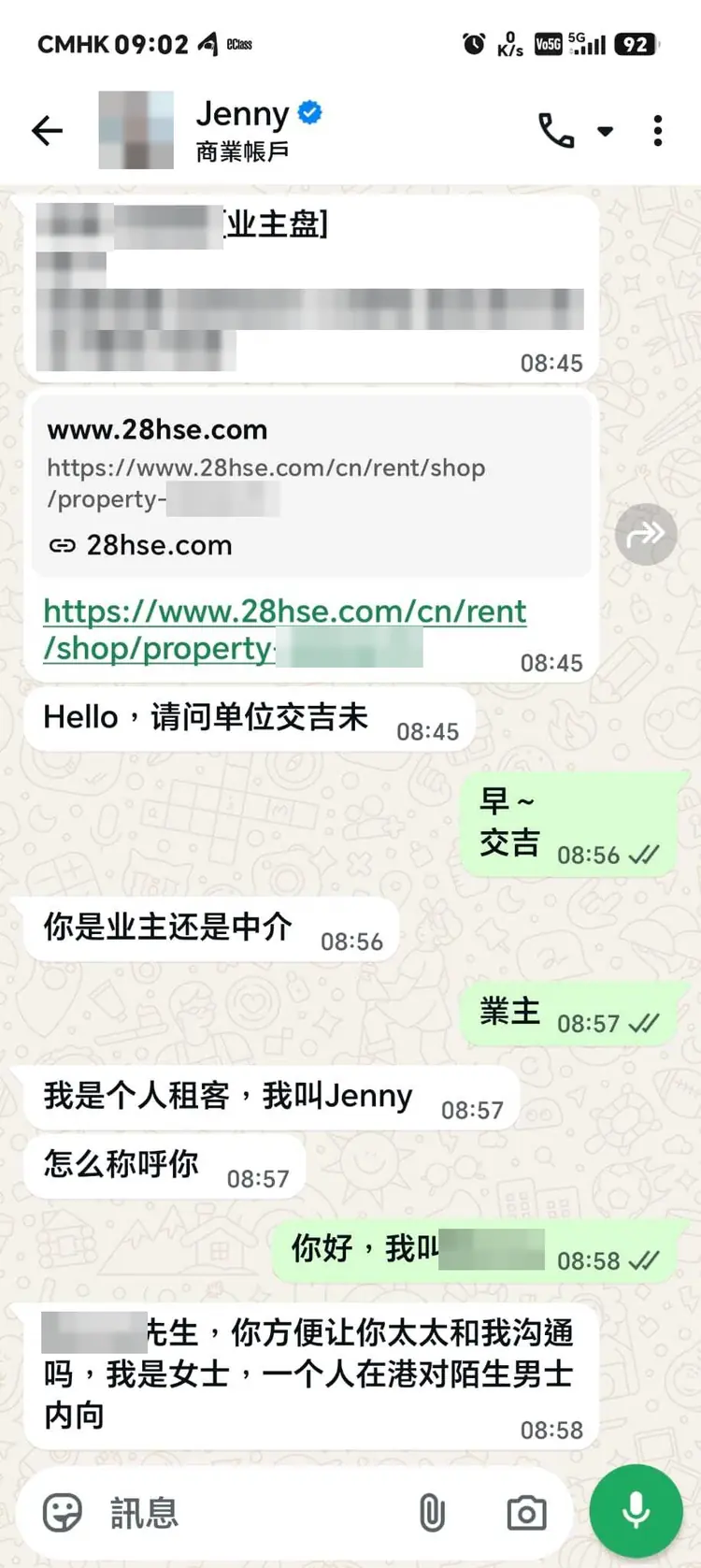
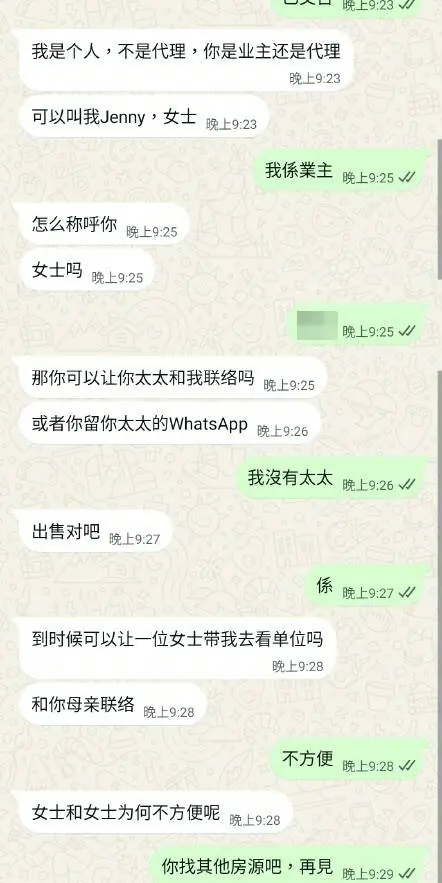
A scammer asks to contact the owner's wife or mother A scammer asks to contact the owner's wife or mother

2. Asking you to open a link and take screenshots

After a few messages, the scammer asks you for "a small favour" and sends a link said to be a bank's securities platform (for example an unfamiliar address ending in ".us.cc"). You are asked to open it and send back screenshots, supposedly just as a test. If you refuse, the scammer keeps pressing, even promising an extra month's rent as thanks once the test is done. This is the first step of a phishing or investment scam. Do not open the link or take any screenshots.
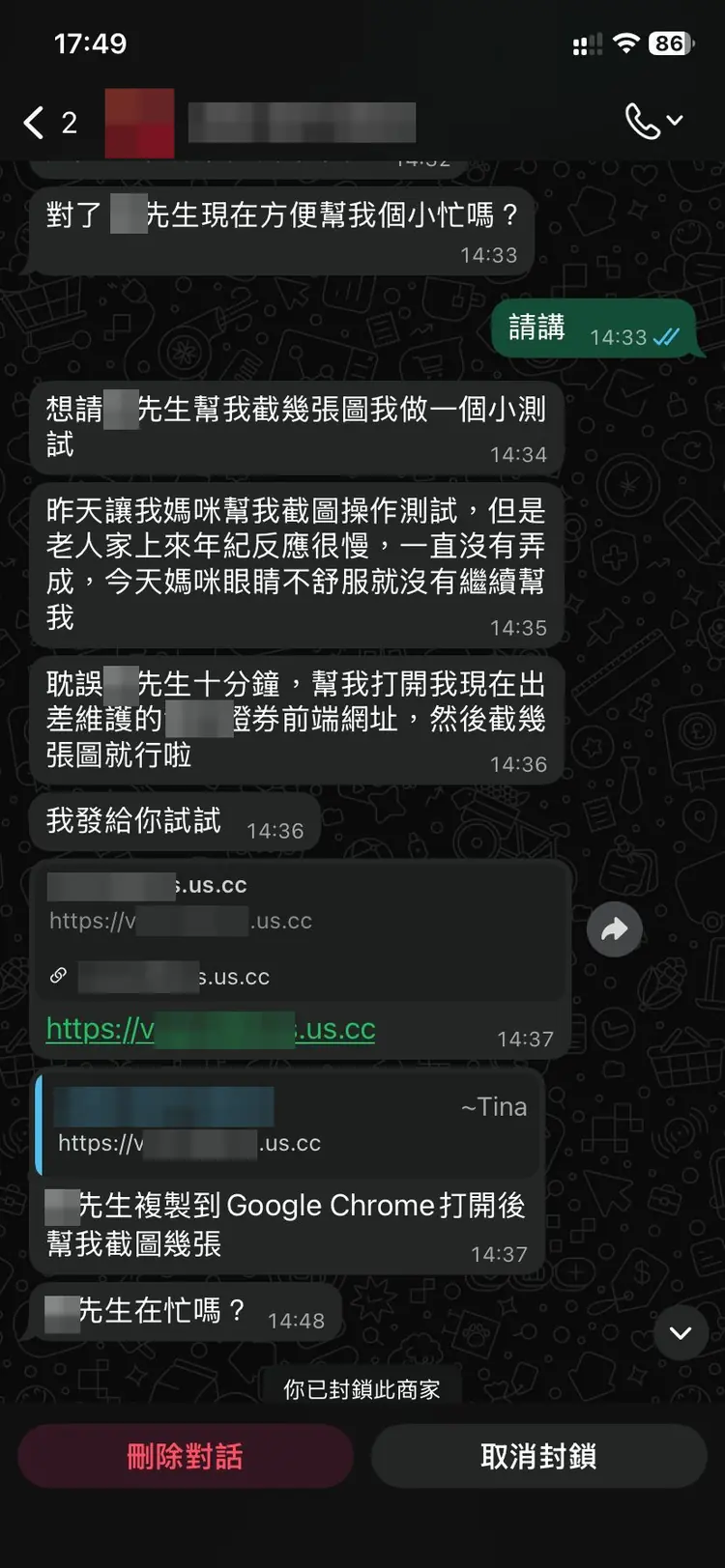
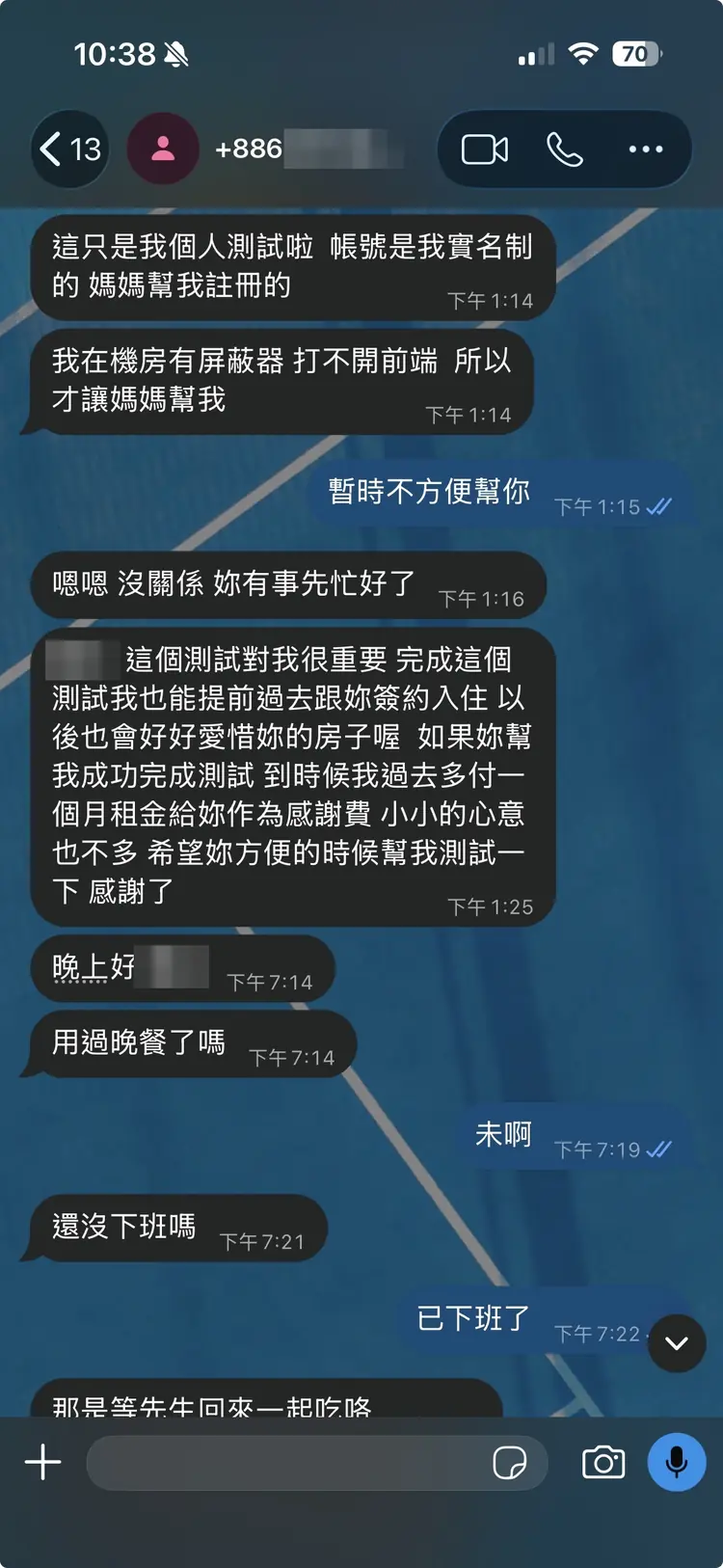
A scammer asks the owner to open an unfamiliar link and take screenshots A scammer asks the owner to open an unfamiliar link and take screenshots

3. Claiming to look for a flat for a relative

When the owner states that the flat is for female tenants only, a man claims to be looking for a flat for his cousin or sister, who will "arrive in Hong Kong at the end of the month", and says he will handle everything on her behalf. This keeps him in contact with the owner while he waits for a chance to defraud them.
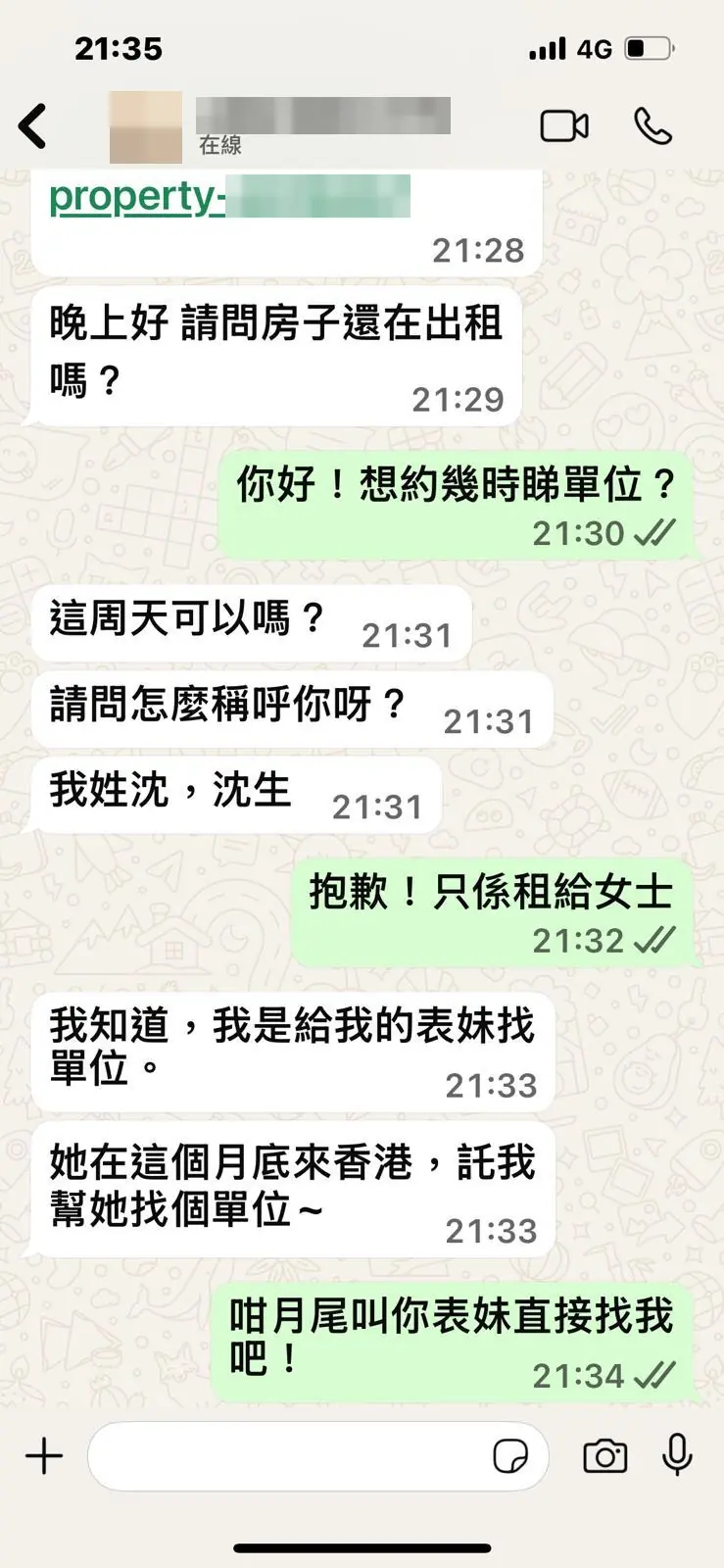
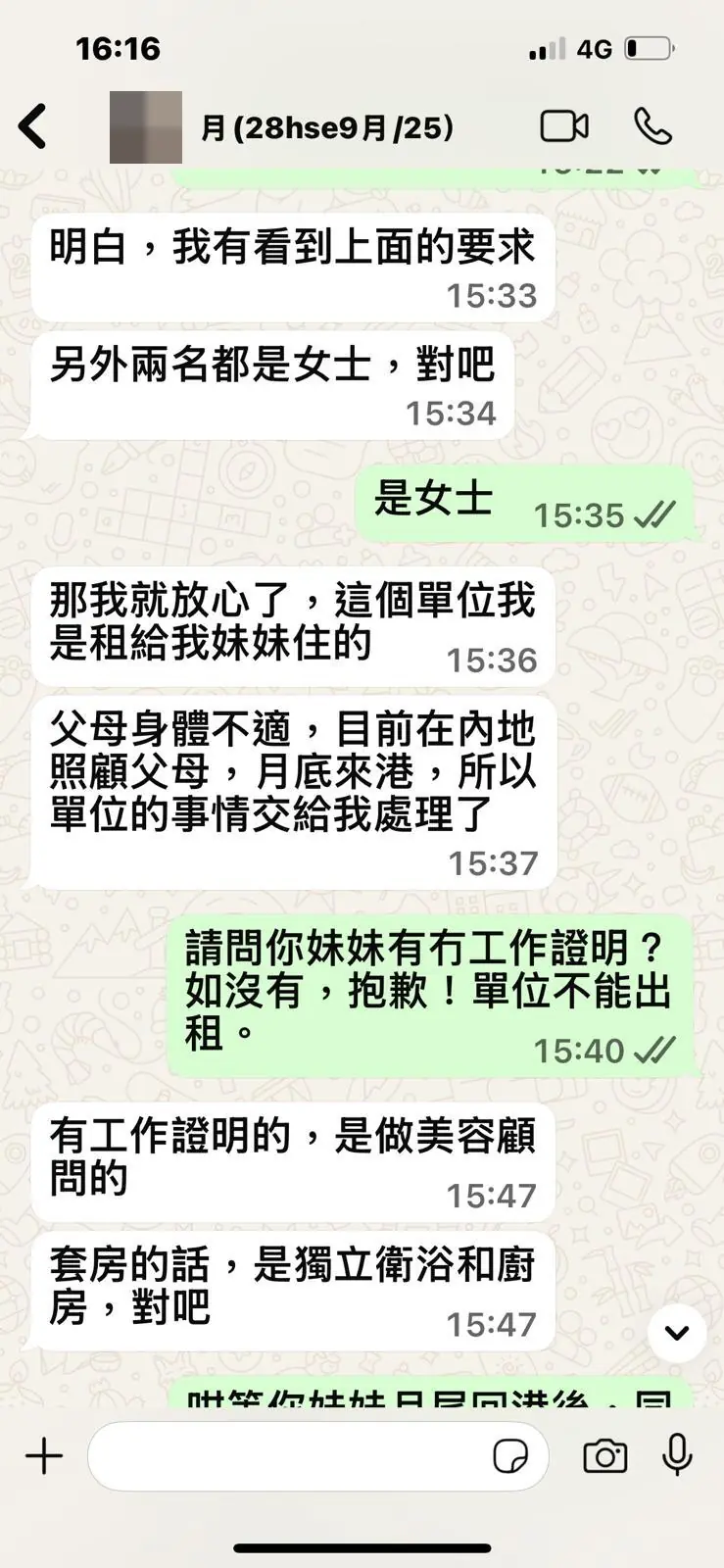
A scammer claims to look for a flat for his cousin or sister A scammer claims to look for a flat for his cousin or sister

4. Sending photos of themselves or their family for no reason

During the conversation, the other party sends photos of themselves or a photo with their "mother" and talks about their family background to win your trust. Some of these photos have been edited.
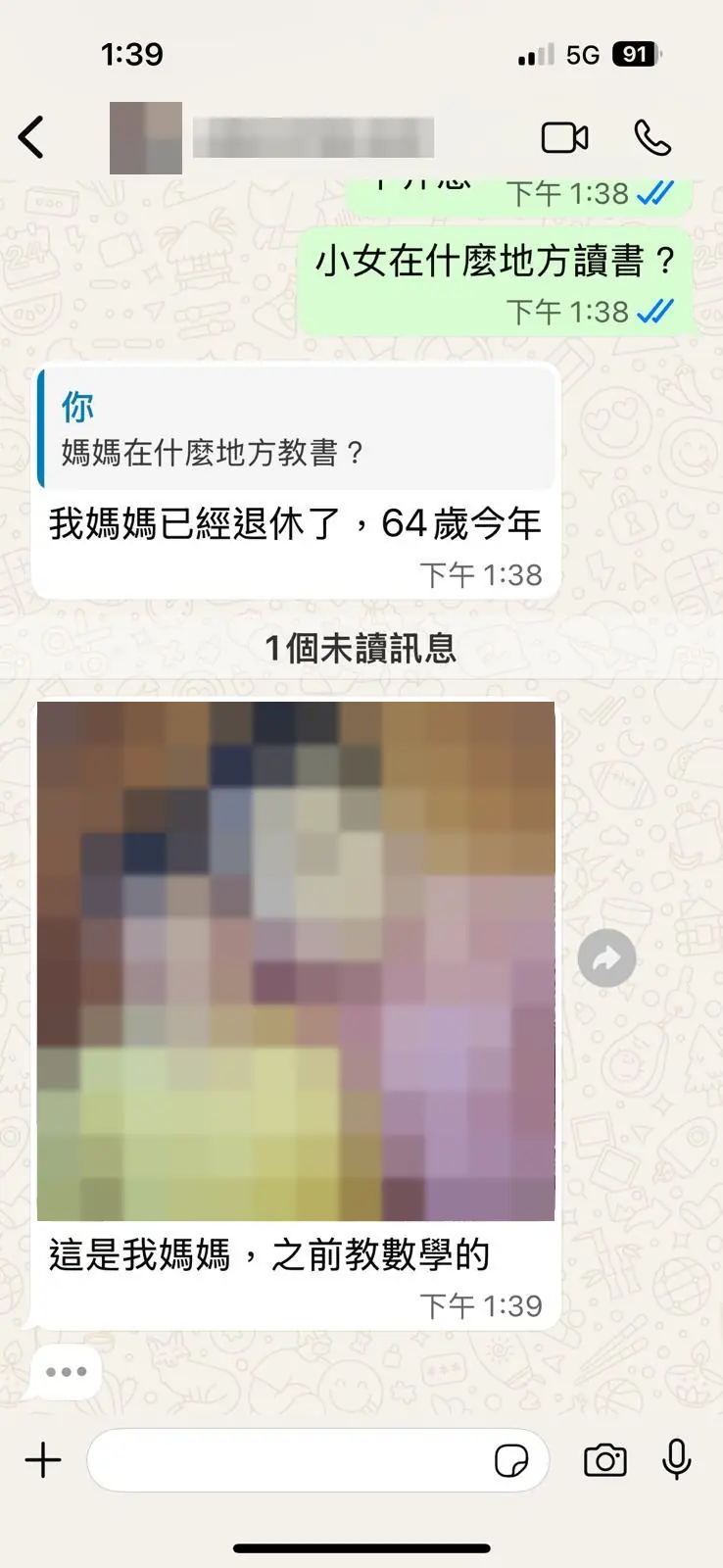
A scammer sends a photo with his mother

5. Showing fake business cards or company documents

Scammers send official-looking business cards or documents to gain the owner's trust, for example:
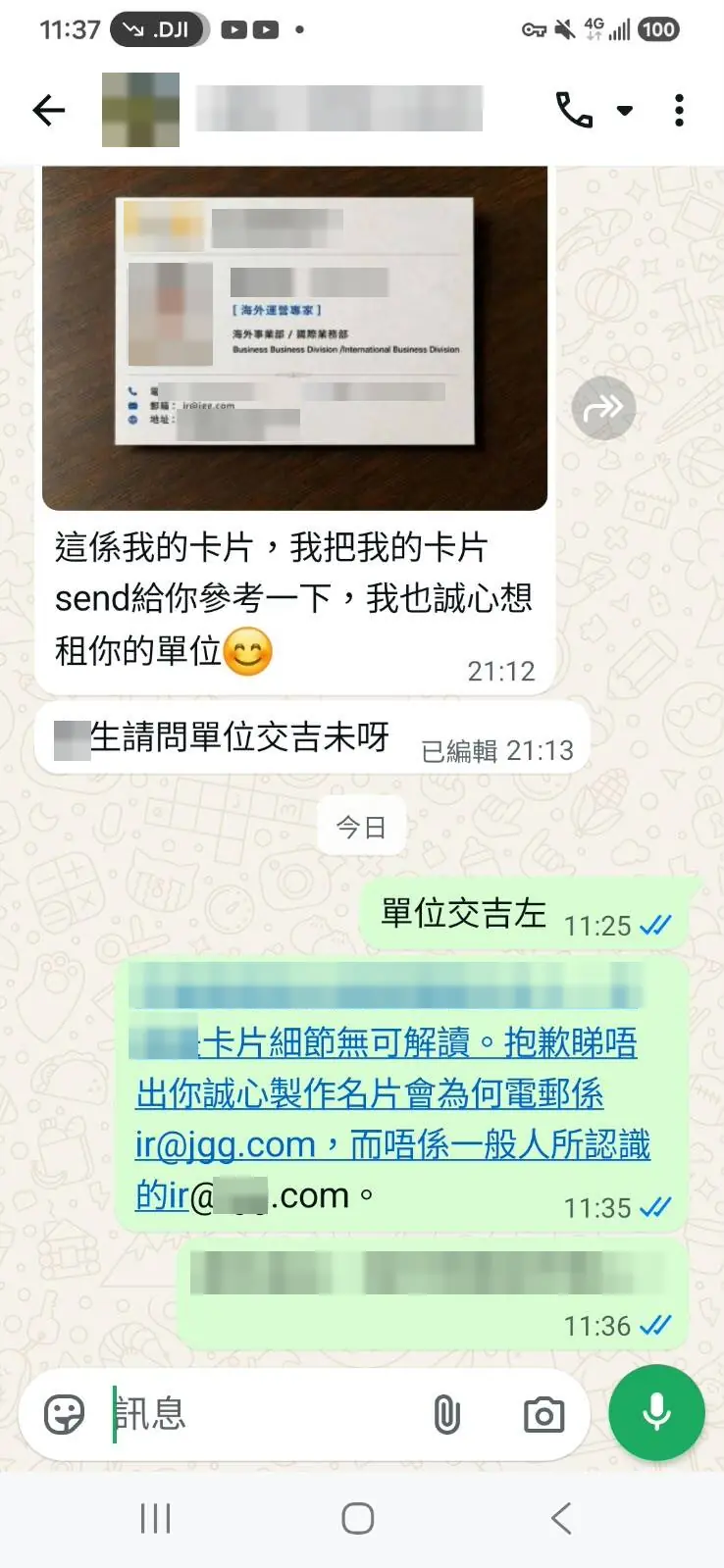
a business card printed with a well-known company's name but an email domain one letter different from the company's official domain (for example "i" replaced with "j");
a business card presenting the sender as a school staff member;
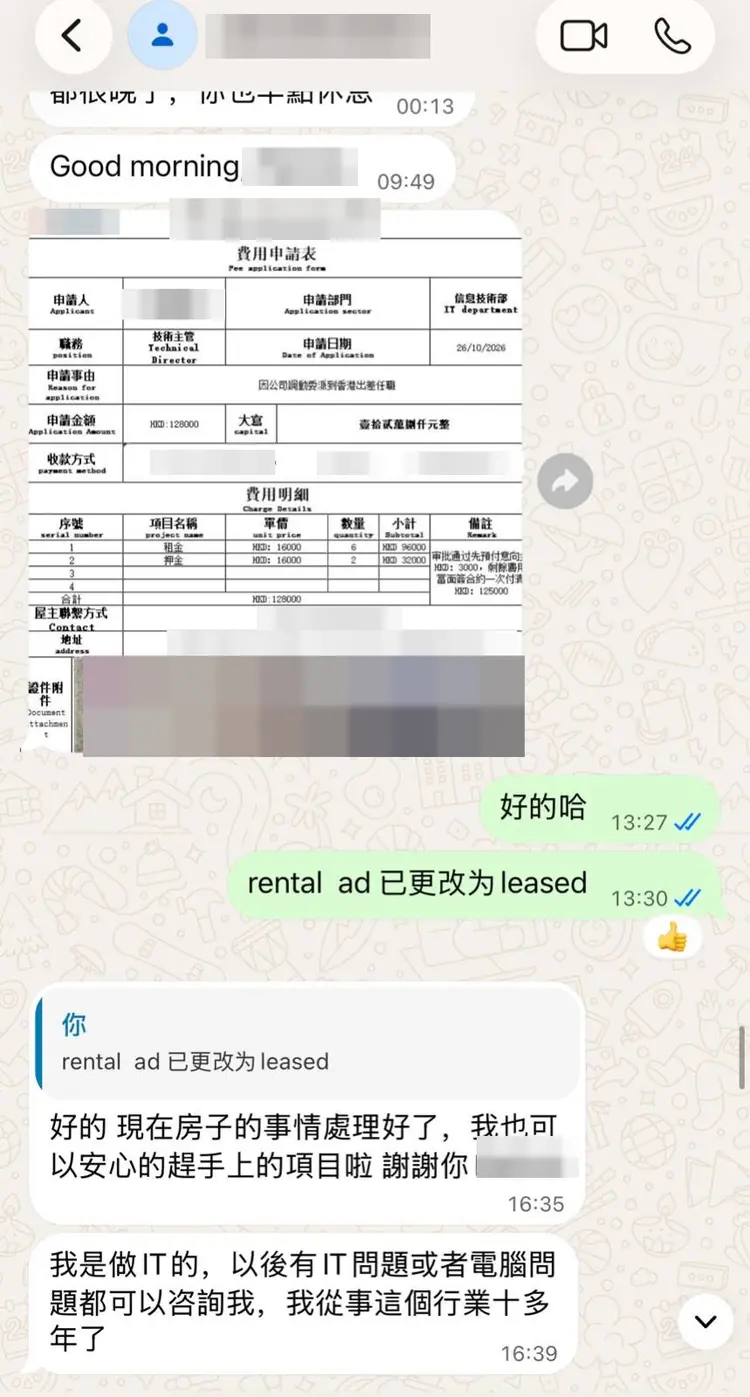
a "company expense application form" with an identity card attached (for example falsely using the name of a technology group), claiming that the company has approved the payment and will cover the deposit and rent.
A scammer sends a fake business card and a fake company expense form A scammer sends a fake business card and a fake company expense form

6. Asking you to send photos of the flat

The other party contacts you from an overseas number (for example a +65 Singapore number), claims not to have saved the listing photos and asks you to send photos of the flat. The photos are already on 28Hse for genuine tenants and buyers to see; scammers may steal them to post fake listings.
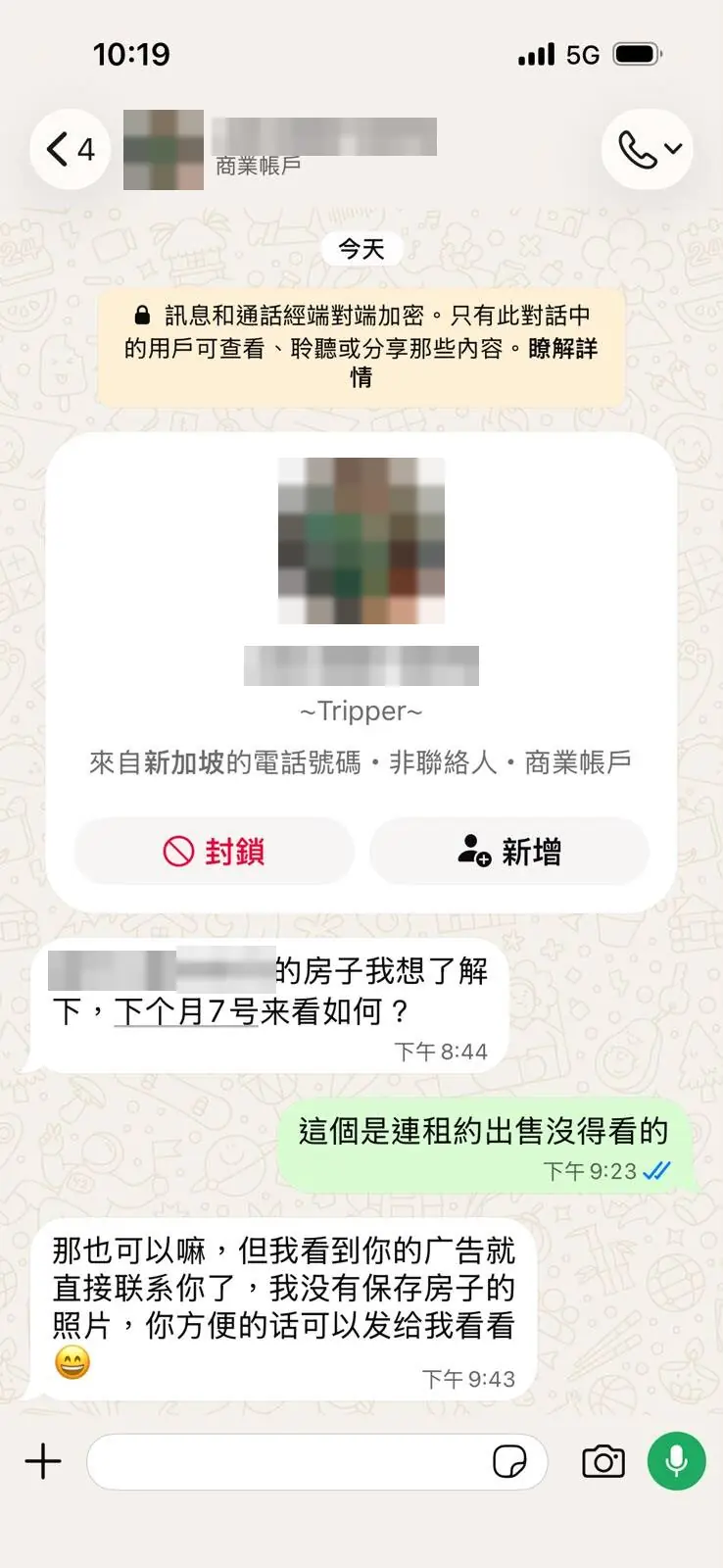
A scammer with an overseas number asks the owner to send photos of the flat

7. Asking about insurance or constantly sharing their daily life

The first message asks whether you "know any friends who sell insurance", or the other party keeps sharing details of their daily life that have nothing to do with the property. Such conversations often lead to an investment or romance scam.
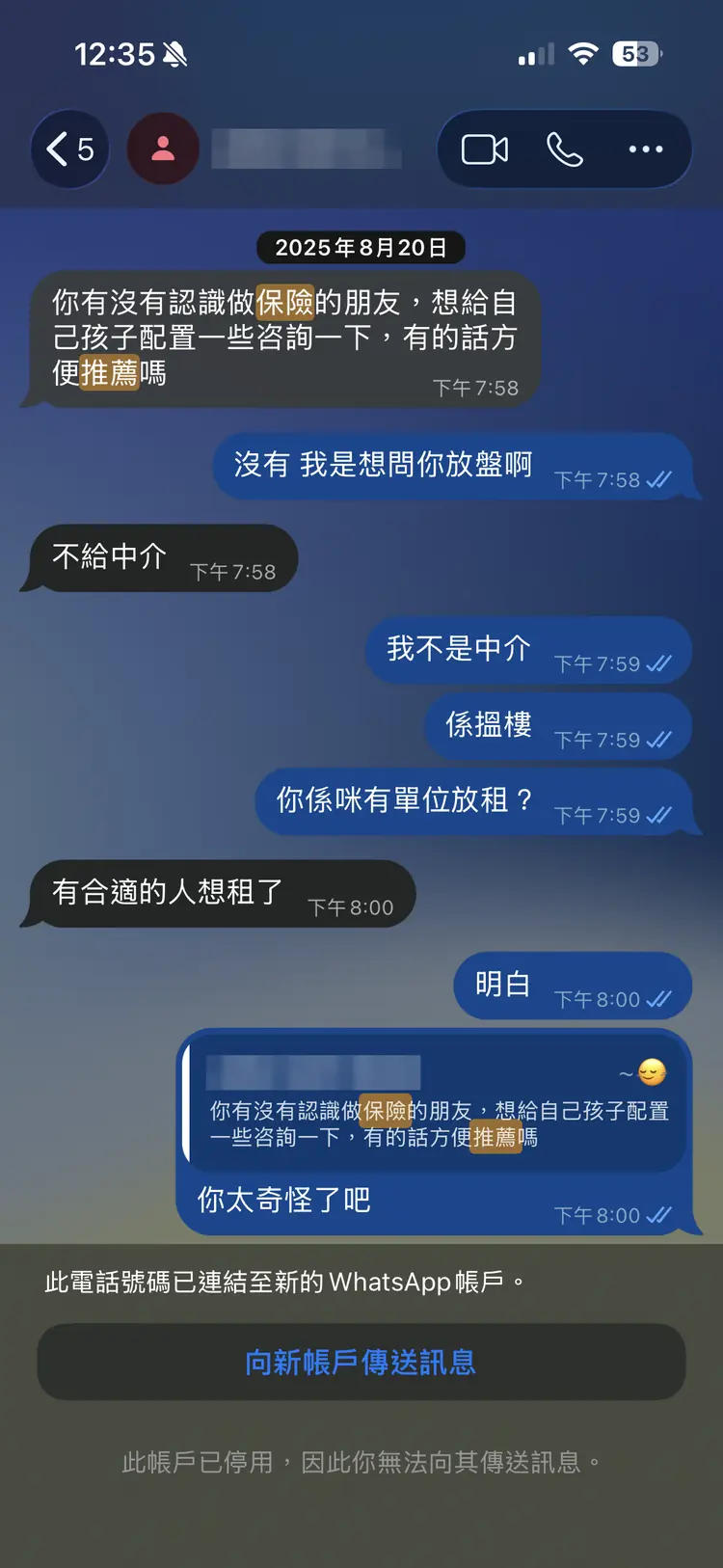

A scammer asks about insurance in the first message