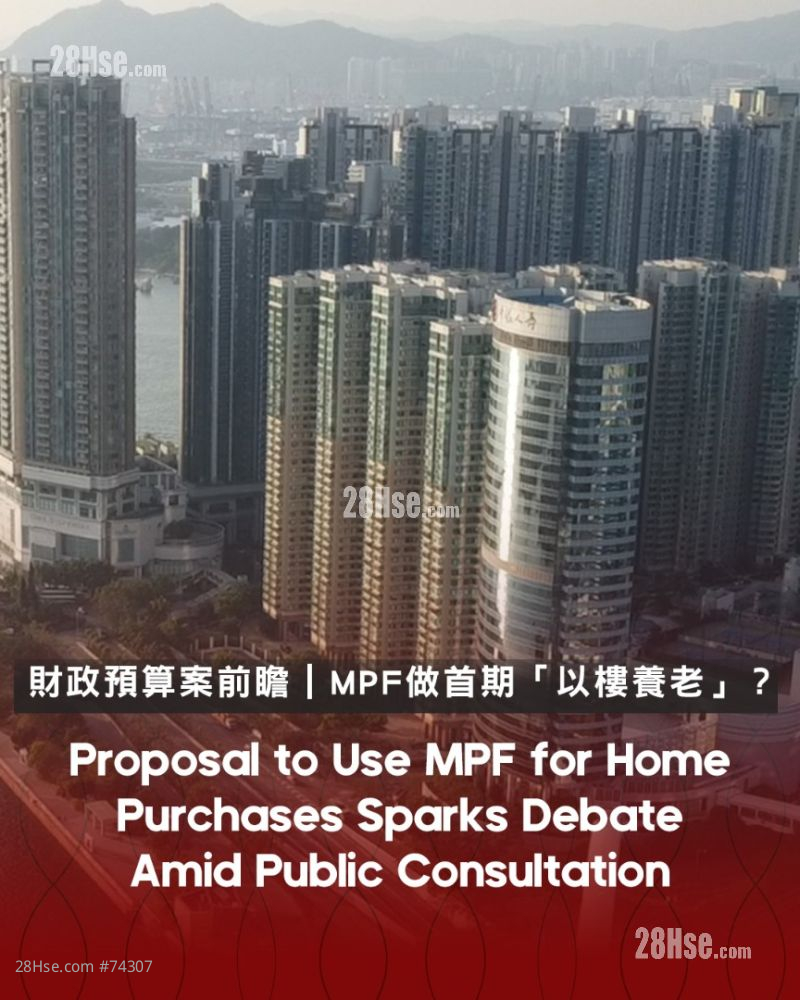
The public consultation for the 2026/27 Budget has been underway for over a month, with different sectors of society offering suggestions to boost the economy and improve livelihoods. Among the proposals, allowing the use of Mandatory Provident Fund (MPF) savings for home purchases has once again become a hot topic. Unlike in the past, Financial Secretary Paul Chan has softened his stance this time, not only promising to review the proposal but also expressing support for reverse mortgages as a way to convert property into retirement income.
This policy could have significant implications, not only for the property market but also for upward mobility and the retirement protection system in Hong Kong, making it a topic worthy of in-depth discussion.
Why Has the Financial Secretary’s Stance Shifted?
Over the past 20 years, calls to adopt Singapore’s model of using retirement savings to fund home purchases have often resurfaced. When the property market was booming, many envied Singapore’s system, while during downturns, such proposals were criticised as the government encouraging citizens to "catch a falling knife." However, the current economic and market conditions are vastly different from the past.
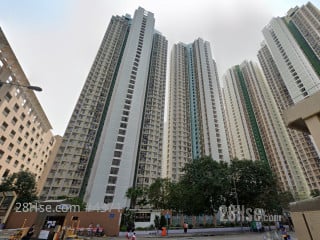
According to the latest figures from the MPF Authority, the total MPF assets stood at HK$1.55 trillion as of the end of 2025, with the average account balance reaching HK$324,000. Some employees with longer work histories have accumulated over HK$1 million in their accounts. Meanwhile, after years of price corrections, property prices for many entry-level homes, such as two-bedroom flats in developments like City One Shatin, have fallen to around HK$4 million.
For many young families, their monthly income may be sufficient to pass mortgage stress tests, but saving up for a down payment remains a major hurdle. Inflation often outpaces their ability to save for a deposit.
Recently, the Federation of Trade Unions and the Federation of Public Housing Estates proposed allowing people to use their MPF savings for their first home purchase, with the option of leveraging reverse mortgages later in life to support retirement. The government has responded by reviewing the effectiveness of the current MPF system in the context of an aging population. Linking MPF funds to property ownership could be seen as a way to expand retirement options while striking a balance between "retirement protection" and "homeownership assistance."
Key to Implementation: Execution Details and Fund Reallocation
If the government moves forward with an MPF home purchase policy, the execution details will determine its success. It is likely that restrictions will be introduced, such as limiting eligibility to first-time buyers or capping the percentage of MPF funds that can be withdrawn. These measures aim to balance housing needs with basic retirement protection.
One critical component would be the introduction of a “fund reallocation mechanism” to maintain the core purpose of the MPF. Under this mechanism, any withdrawn MPF funds would be tightly regulated. For example, the funds would be directly transferred to the seller or law firm handling the transaction to prevent misuse. More importantly, homeowners would be required to repay the withdrawn amount, along with potential returns, back into their MPF accounts upon selling the property. This design ensures that the funds ultimately return to the retirement system and discourages speculative short-term property trading, keeping the focus on self-use housing needs.
Lessons from Singapore: Key Differences in Contribution Structures
When discussing the use of MPF for home purchases, Singapore's Central Provident Fund (CPF) system is often cited as a reference. In Singapore, citizens can use their CPF savings to pay for public housing or private properties, resulting in a high homeownership rate. However, there are fundamental differences between the two systems.
Singapore’s CPF has a much higher contribution rate, with combined contributions from employers and employees reaching over 30% of monthly salaries, creating a robust pool of savings that can support both housing and retirement needs. In contrast, Hong Kong's MPF contributions are much lower, with both employers and employees contributing just 5% each, and there is a salary cap. This means the amount available for withdrawal under Hong Kong’s MPF system is far more limited.
Nonetheless, the amount accumulated in MPF accounts can still make a significant difference for first-time homebuyers. For example, a middle-class couple with 10 years of work experience, each earning HK$20,000 to HK$25,000 a month, would contribute around HK$4,000 to HK$5,000 to their MPF accounts monthly. Over 10 years, their combined principal contributions alone would total nearly HK$500,000. With long-term investment returns factored in, their MPF accounts would likely hold around HK$400,000 to HK$600,000.
Currently, with a 90% mortgage, this amount could cover the down payment for a small to mid-sized property priced at HK$4 to HK$5 million. While Hong Kong cannot fully replicate Singapore’s system, relaxing MPF restrictions moderately could help address the common challenge of saving for a down payment, providing practical support to aspiring homeowners.
Market Ripple Effects: Boosting Home Upgrades and Potential Risks
If the policy to allow MPF withdrawals for property purchases is implemented, it will have varying impacts on different stakeholders in the market. First-time buyers and young families will be the most direct beneficiaries, as the policy would lower the entry barrier and allow them to purchase homes earlier. However, if young people stretch their finances to the limit by exhausting their MPF savings to "get on the property ladder," they could face a triple threat in the event of an economic downturn or unemployment: losing their job, their property falling into negative equity, and depleting their retirement savings. Therefore, potential buyers must act within their means and carefully assess their repayment capacity.
For existing homeowners and investors, the policy is likely to boost transaction volumes for lower-priced properties. Demand for small- to mid-sized units priced below HK$6 million is expected to increase, making it easier for owners of these units to sell and cash out. This would, in turn, enable them to upgrade to larger properties, revitalising the long-stagnant property ladder. Such activity could promote healthier property market development and align with policy goals.
As for speculators, if the policy strictly limits eligibility to first-time buyers and self-use properties, and includes measures such as requiring withdrawn MPF funds to be repaid upon resale, it would leave little room for speculation. This would be consistent with the government’s intention for housing to serve residential needs rather than speculative trading.
Retirement Security: From MPF Savings to Property Ownership
One of the main concerns about allowing early MPF withdrawals for home purchases is the potential impact on retirement security, as it deviates from the MPF’s original purpose as a retirement savings scheme. However, retirement protection can take many forms. Consider two scenarios:
In the first, a retiree has HK$2 million in cash but no property, leaving them exposed to long-term rent payments and inflation risks. In the second, the retiree has less cash but owns a fully paid-off property, ensuring stable housing costs while potentially generating income through a reverse mortgage. Between the two, property ownership often provides greater stability.
Property ownership not only offers a place to live but also serves as a source of cash flow in retirement. For example, a retiree owning a HK$6 million property could opt for the Hong Kong Mortgage Corporation’s reverse mortgage program. Under the lifetime payout scheme with a fixed interest rate, a 65-year-old retiree could receive around HK$14,280 per month for the rest of their life while continuing to live in the property. This approach addresses both housing and living expenses, offering a level of security that cash savings in an MPF account alone cannot match.
Additionally, MPF funds are currently heavily concentrated in financial products. While Hong Kong’s stock market has performed well in recent years, over-reliance on a single asset class poses long-term risks. Allowing part of the MPF to be allocated to real estate would diversify investments across both capital and property markets. Since property is inherently inflation-resistant, this would provide an additional layer of protection for retirement savings in the long run.
Conclusion
Relaxing MPF restrictions to support homeownership has both pros and cons, and the success of such a policy depends on its timing and execution. With property prices having corrected to more reasonable levels in recent years, the risks of entering the market are lower now than three to four years ago, making this an opportune time to explore the policy.
If the government decides to move forward, a cautious and phased approach is recommended:
1. Set a withdrawal limit, such as up to 50% of the MPF account balance, while ensuring a minimum of HK$100,000 remains for basic retirement security, or implement a tiered system.
2. Strictly limit eligibility to first-time buyers and self-use properties to prevent speculation.
3. Establish a robust "fund reallocation mechanism" and link it to the reverse mortgage program to ensure withdrawn funds eventually return to retirement savings.
If risks are properly managed, this policy could improve liquidity and transaction volume in the property market while offering young people an additional option to achieve homeownership.