In the latest Policy Address, the government relaxed the mortgage cap for both residential and non-residential properties, increasing it to 70%. This change also benefits parking spaces. According to data from the Land Registry, there were 386 parking space registrations in October, a 23.7% increase from September’s 312, marking a three-month high.
Apart from the relaxed mortgage criteria, most new developments offer fewer parking spaces compared to residential units, and some estates don’t provide any parking at all. This shortage, combined with high demand, has driven up the value of parking spaces, making them a viable investment option and boosting transaction volumes.
For those interested in investing in parking spaces, it’s important to understand the different types available. Parking spaces are generally categorised for private cars, motorcycles, trucks, and electric vehicles. Buyers should select the type of parking space that suits their specific needs.
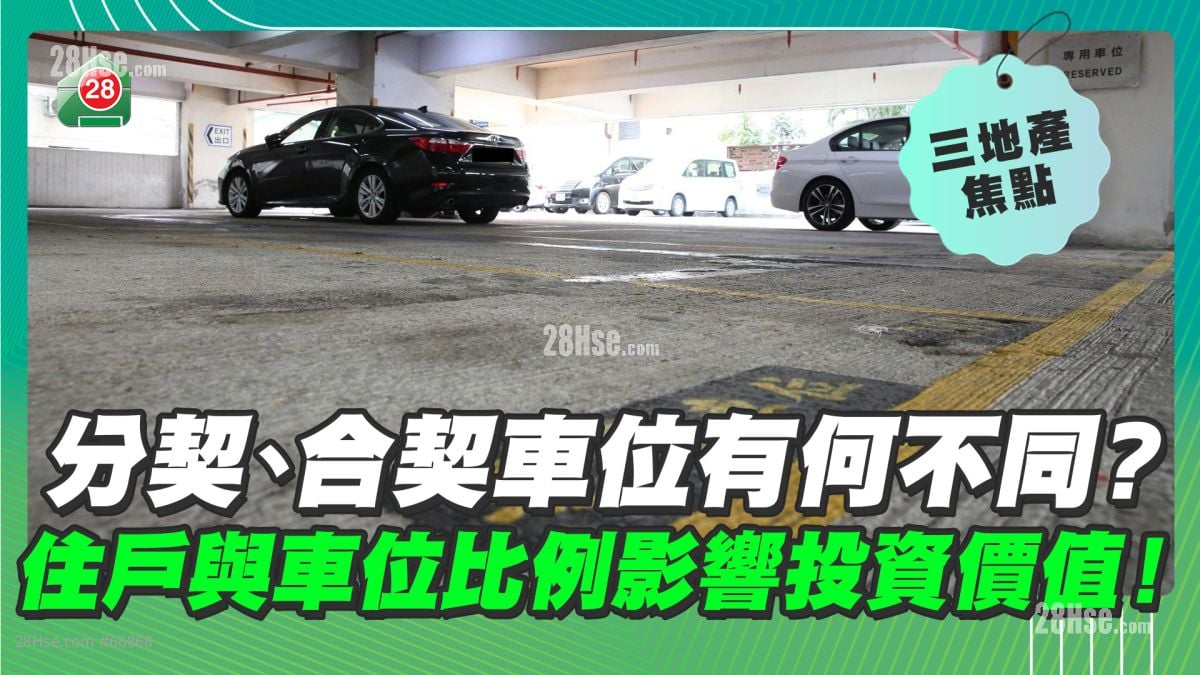
Those intending to apply for a parking space mortgage should note that the terms vary depending on the type of space. Mortgages for parking spaces are mainly divided into standalone spaces, “tied spaces”, and “split-tied spaces.” Standalone spaces are those that can be bought and sold independently, with a mortgage cap typically up to 70%. Split-tied spaces are spaces that were originally tied to a residential unit but have been sold separately; these have mortgage terms similar to standalone spaces. Tied spaces are sold together with a residential unit and cannot be separated; in such cases, the mortgage is treated as part of the property, with a cap of up to 90%. Potential buyers should consult with banks before applying for a mortgage to understand the valuation, interest rates, and loan terms for parking spaces, as parking space transactions tend to be less transparent than property transactions.
When considering an investment, it's crucial to assess the supply and demand of parking spaces within the estate. If the ratio of residential units to parking spaces exceeds 5:1, this indicates that demand outweighs supply, potentially increasing the investment value of the parking space. Additionally, the presence of public parking facilities nearby can affect the value of the parking space.
Before purchasing, it’s important to carefully review the deed, as some parking spaces come with restrictions. For example, some spaces may only be sold to or rented by residents of the same estate, and certain estates may limit the number of parking spaces an individual can own, typically to a maximum of three. These restrictions can reduce the flexibility of the investment and affect potential returns.
The process of buying a parking space is similar to purchasing property. Generally, both parties will sign a Provisional Sale and Purchase Agreement, followed by the formal agreement within 14 days, along with the payment of stamp duty. In some cases, the provisional agreement may be skipped altogether.
In terms of expenses, buying a parking space is much like buying property. Buyers need to cover agent commissions (if the deal is brokered through an agent), legal fees, stamp duty, and recurring costs such as rates, government rent, and management fees.
It’s important to remember that no investment is risk-free. Therefore, before investing in parking spaces, buyers should carefully weigh the potential risks and rewards.