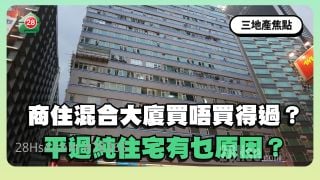
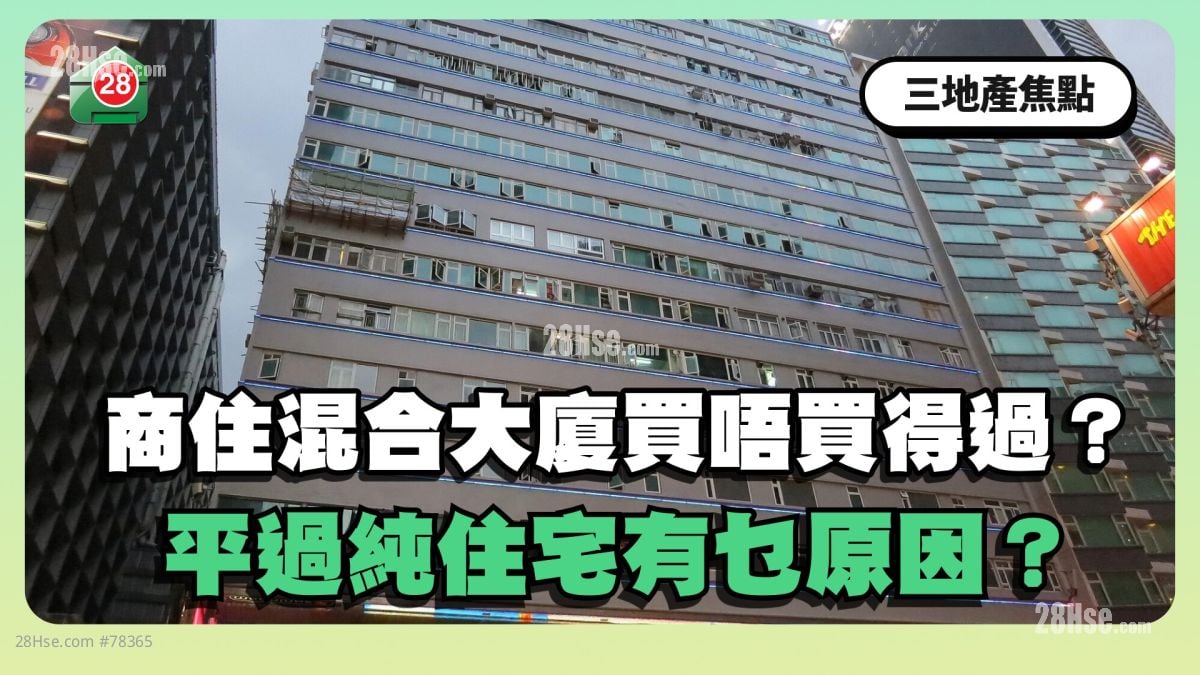
Some older districts in Hong Kong have many mixed-use buildings, where the upper floors can be used for residential purposes, while the lower floors or certain other floors accommodate shops, offices and even restaurants. Properties in these buildings are sometimes priced lower than those in nearby residential-only buildings. Many are also located in central urban areas, with convenient transport links and a full range of amenities, attracting the attention of many buyers. But are mixed-use buildings worth buying into?
In fact, there is no absolute answer, as it depends on the property's actual use, the quality of the building and the buyer's housing needs. In terms of advantages, mixed-use buildings are mostly located in central urban districts such as Mong Kok, Causeway Bay and Tsim Sha Tsui, close to MTR stations, shopping centres, wet markets and restaurants, providing easy access to everyday necessities. For buyers who value transport links and convenience, these properties remain considerably attractive despite their age.
At the same time, some residential units in mixed-use buildings are priced lower than those in newer residential-only developments nearby. The main reasons include the buildings' older age, more basic communal facilities, varying management standards and some buyers' concerns about floors used for commercial purposes. Therefore, for those with a limited budget who wish to live in the city centre, mixed-use buildings may offer another option.
However, buyers should also carefully consider foot traffic and the living environment. If a building contains offices, clinics or beauty salons, it generally experiences more foot traffic during the day than a residential-only building. Residents may also need to share lifts with visitors, resulting in relatively less privacy. If there are restaurants on the lower floors, residents may also face problems such as cooking fumes, unpleasant odours, noise and the loading and unloading of goods by delivery vehicles.
In addition, security is another factor worth considering. Residential-only developments generally have clearer arrangements for managing residents and visitors. In contrast, mixed-use buildings need to allow customers of commercial units to enter and leave, meaning access control may not be completely restricted. When viewing a property, buyers should check whether security guards are stationed in the lobby, whether residential and commercial floors have separate lifts, and how access to the building is managed at night.
Another important consideration is the permitted use of the building. Even if a building is described as mixed-use, this does not mean that every unit can freely change its use. Different units may have different approved uses, government lease conditions, Deeds of Mutual Covenant and government approvals. Before signing a sale and purchase agreement, buyers should ask their solicitor to confirm the unit's legally permitted use and whether any restrictions apply.
When assessing mortgage applications, banks also consider factors such as the property's actual use, age, building quality and valuation. If the property is not intended for ordinary residential use, the loan-to-value ratio, repayment period and interest rate may differ from those of a conventional residential property. Buyers should remember to check the bank's valuation and mortgage arrangements before signing a contract to avoid difficulties completing the transaction due to an insufficient down payment budget.
Finally, the risks associated with major repairs should not be overlooked. Most of these buildings are relatively old, and their external walls, lifts, water pipes and fire safety systems may require major repair works at any time. If ownership of the building is spread among numerous owners, some of whom are companies or investors, organising repairs and raising funds can often be more complicated. Before buying, purchasers should check whether the building has any major repair plans in the near future, and whether the management fees and maintenance fund are sufficient.