The sales of pre-sale units slow down, and the potential supply increased by 2,000 units.
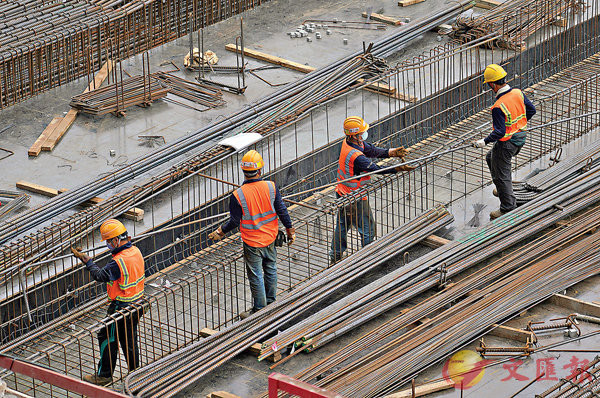
Many construction projects in Hong Kong have been halted under the impact of the COVID-19 epidemic. Besides, the government has reduced the supply of private residential land in recent years. Thus, there was a significant drop in the construction of first-hand properties in the previous quarter. The Transport and Housing Bureau announced yesterday that the construction of private housing in the first quarter of this year was only 900 units, a substantial decrease of about 77.5% from the 4,000 units in the fourth quarter of last year, and a two-and-a-half-year low. The potential supply of private housing in the next three to four years increased by 2,000 units to 95,000 units in the first quarter, because the first-hand property pre-sale schedule is affected.
Journalist Ngan LunLok
The construction of first-hand property in the first quarter was only 900 units. The Research Department Director of Ricacorp Properties, Chen Hoi-Chiu believes that the reasons for the slow down of the construction schedule include the market slip caused by social instability after the mid last year. Besides, most of the first-hand property sales have been frozen due to the outbreak of the COVID-19 epidemic in the first quarter this year, which has further slowed down the developer's construction plans and pace. Lau Ka-Fai, the Lead Analyst of Midland, also believes that the significant decrease in construction volume in the first quarter is related to the impact of the epidemic, and it is estimated that the construction volume will rebound as the epidemic passes.
The potential supply in four years is 95,000 units.
However, the number of units that can be built in the land sale plan has decreased significantly in the past two years. There were about 14,500 units in 2018/19, and even low to about 12,200 units in 2019/20. So, it is estimated that the construction volume this year will be less than 18,000 units in the past two years. The report also announces the latest new supply for the next three to four years. As of the first quarter of this year, the potential new supply in the next three to four years is 95,000 units, up by 2% quarterly.
The industry points out that there are two reasons for the increase in potential supply. One is the projects that have been approved and can be started at any time will supply 3,000 units more to 25,000 units. The other is the pre-sale property number last quarter decreased by 2,000 units quarterly to 15,000 units due to the effect of the epidemic.
"Restriction of Gathering" affects the launch of first-hand properties.
Chen Kwan-Hing, the Managing Director of Q-Fang Hong Kong, expresses that the rise in potential private housing supply in the first quarter may only be a temporary rebound due to the impact of the epidemic. The number of newly confirmed cases has decreased recently. Developers will restart the pace of the first-hand property sales after the release of the "Restriction of Gathering," leading a possible rebound in the first-hand property sales in the future. Besides, the land available to be approved by the government is limited. Thus, the potential supply in the first-hand property market may fall again.
The land ready for development increased in the first quarter this year, while the first-hand property sales slow down due to the epidemic. According to the market statistics, first-hand property sales were only about 2,400 units, down over 20% by quarter, and the transactions did not offset the increase in projects that ready for development. Chen Hoi-Chiu believes that the number of 95,000 units does not reflect the significant increase in potential supply. He thinks it is only a lagging factor in response to the market conditions under the epidemic. With the epidemic situation under control and slowing down, the property market is expected to stabilize and rebound in the second half of the year.
Property prices are challenging to rise under a weak economy.
Lam Ho-Man, the Executive Director of Knight Frank, points out that the government has worked hard to try different methods to increase land supply. Still, the progress is not dramatic subject to political and social conditions, epidemic conditions, opinions of various stakeholders, and other factors. The short-term supply is enough, but the medium and long-term land supply after 2023 is still unresolved. He estimates that residential housing supply, construction volume, and completion volume are challenging to meet the targets this year. But he believes that insufficient supply will not push up property prices, and the economic downturn will always affect purchasing power.
Lam Ho-Man continues that although the property market is estimated not sharply fall like that when SARS outbroke in 2003, it is necessary to pay attention to whether social events will continue after the epidemic is stable. The completion in the first quarter this year was 4,200 units, up by about 20% by quarter. The rise is believed caused by the delay to this year of the projects' completion, while they should have been finished last year. The figure in the first quarter has accounted for about 20% of the government 's annual completion forecast of 20,850 units.
Taking into account the changes in the above data, in the new supply for the next three to four years, the number of unsold pre-sale properties decreased by 1,000 units to 60,000 units quarterly. The number of unsold completed units will maintain steady, on a 10,000 level that has lasted four quarters. The Transport and Housing Bureau adds that small and medium-sized units that less than 70 sq meters among the 95,000 potential supply units are 76,700, accounting for 81% of the overall supply, and up slightly by 1% quarterly. It also expects that six residential land sites will be ready for development in the next few months, and they will provide about 2,400 units.
Disclaimer : All wordings and pictures which indicated 28HSE editor are the copyright of 28HSE LIMITED. Acknowledgement is required if other parts of this publication are used. The content is for reference only, does not constitute investment advice and it does not mean that 28HSE agreed the points. The area which show in the article is salable area if there is no special circumstances. The pictures is for reference also.