
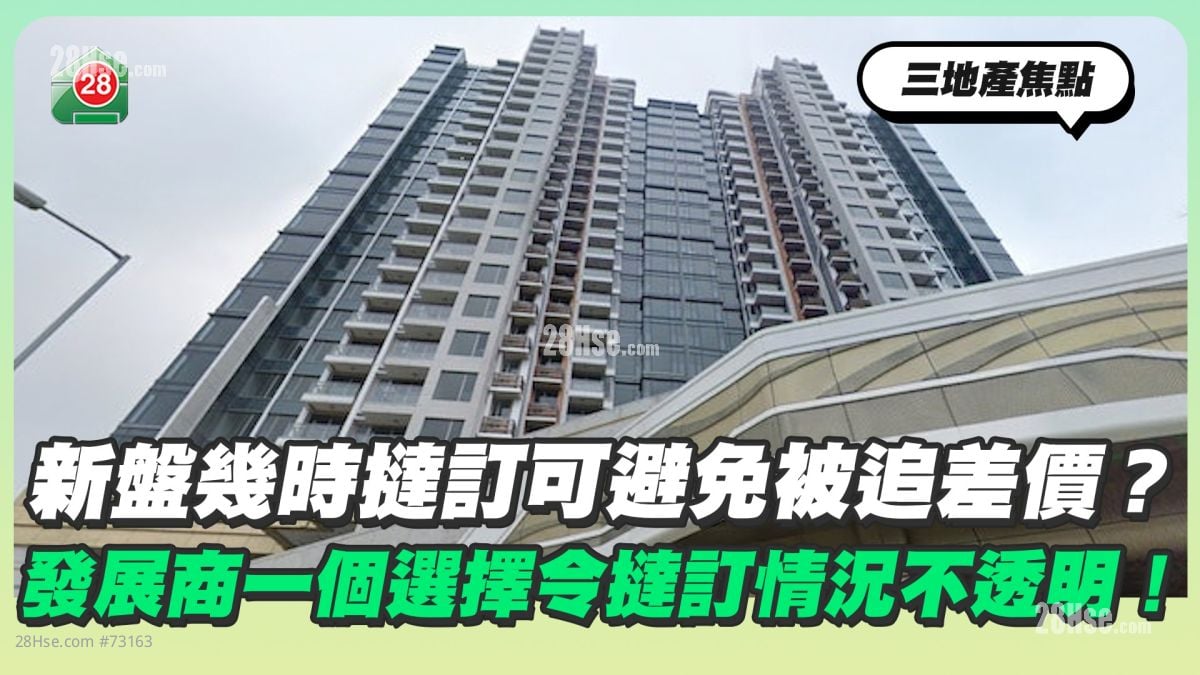
Recently, media reports revealed that at least eight buyers who forfeited their deposits for two new developments under CK Asset Holdings—#LYOS and El Futuro—are being sued by the developer to recover losses from the resale of the units. The total amount being pursued is approximately HK$17.65 million. Among these cases, three buyers have even been declared bankrupt due to their inability to settle the outstanding payments.
The eight units in question were originally purchased for a combined value of over HK$120 million during the property market peak in 2021, with transaction prices ranging from HK$4.45 million to HK$27.6 million. These buyers have already forfeited HK$8.61 million in deposits, and the additional losses being pursued range from HK$550,000 to HK$7.4 million per case.
Under the Residential Properties (First-hand Sales) Ordinance, buyers must sign the formal sale and purchase agreement (S&P) within five working days of signing the provisional agreement. If they fail to do so, the provisional agreement is terminated, and the deposit is forfeited. In such cases, buyers are not required to pay further compensation, and the transaction details are reflected in the sales record.
However, if a buyer forfeits their deposit after signing the formal S&P agreement, the developer can not only seize the deposit but also pursue compensation for the price difference if the property is resold at a lower price. Notably, these forfeited transactions are not always immediately reflected in the sales record.
In this situation, when a buyer decides to forfeit their purchase, they are required to notify the developer in writing. Once the developer accepts the breach of contract, the buyer will receive written confirmation through their lawyer. If the resale price of the property is lower than the original purchase price, the developer can pursue the buyer for the price difference. However, the developer must resell the unit within six months to claim these losses. According to the Limitation Ordinance, developers have up to six years to recover the associated damages.
When a buyer decides to forfeit their purchase, they must notify the developer in writing. Once the developer accepts the breach of contract, the buyer will receive written confirmation through their lawyer. If the property is resold at a higher price, there is no additional liability for the buyer. However, if the resale price is lower, the developer can pursue the difference. Developers are required to resell the unit within six months to claim losses, as per the Limitation Ordinance, which gives them six years to recover such damages.
Why might the forfeiture cases mentioned above not be reflected immediately? This is because, after receiving the buyer's notification, the developer is not required to respond immediately. As a result, the transaction remains technically active and is not officially cancelled until the breach of contract is accepted by the developer. The timing of when the forfeiture is acknowledged is, to some extent, controlled by the developer.
Additionally, developers are required to resell the unit within six months in order to minimise the original buyer's losses and claim any related compensation. However, developers may choose to delay accepting a buyer's forfeiture request, potentially waiting for property prices to rise before reselling the unit, thereby reducing the price difference and minimising their financial losses caused by a market downturn.
This highlights that the purpose of sales records for new developments is to provide the public with transaction information, helping potential buyers better understand market conditions. However, there is still a lack of transparency regarding forfeiture cases, as developers have the ability to decide when to accept a forfeiture and disclose it.